October 9, 2026
In line with the IMO global sulphur cap (0.5%) and to reduce emissions from ships in its ports, the South Korea Ministry of Maritime Affairs and Fisheries (MOF) has introduced the Special Act on Improving Air Quality in Port Areas, Etc., beginning on January 1st 2020 to limit ship sulphur emission and vessel speed.
I. South Korea’s Emission Control Area (ECA)
1. Effective date: September 1st, 2020
2. ECAs:
Incheon area
Pyeongtaek & Dangjin area
Yeosu & Gwangyang area
Busan area
Ulsan area
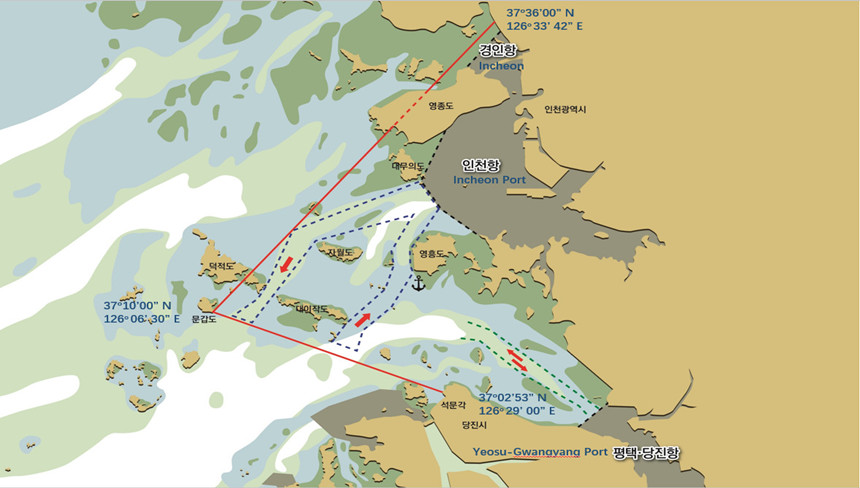
3. Sulphur restrictions
From September 1st, 2020 to December 31st, 2021, vessels will be required to use maximum 0.1% sulphur fuel when berthing/anchoring for the times set out below:
- Berthing: 1 hour after completion of berthing until 1 hour before de-berthing.
- Anchoring: 1 hour after completion of anchoring until 1 hour before leaving anchor.
From January 1st, 2021, it will be mandatory to use fuel with maximum 0.1% sulphur content, or approved alternatives including LNG and Exhaust Gas Scrubber, while navigating ECAs.
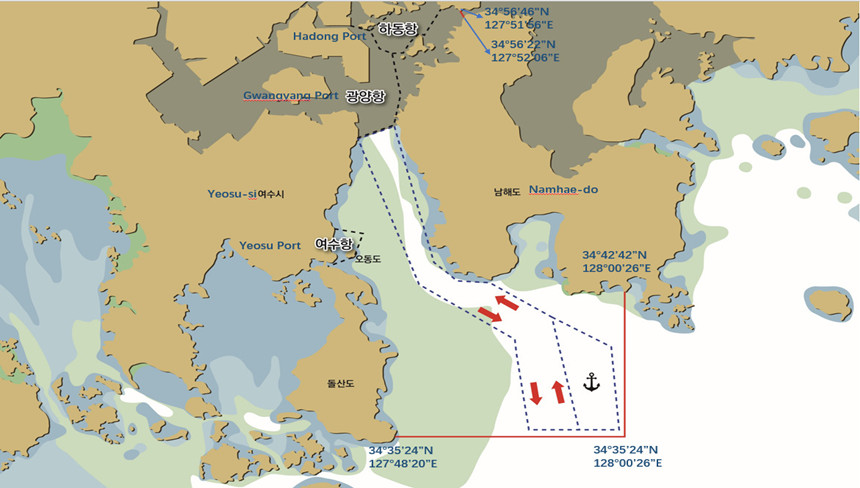
4. Recommendations
1) Confirm with local agents or port authorities for detailed emission control requirements prior to arrival.
2) Revisit bunkering strategies and fuel change-over procedures to ensure compliance with the new limits.
3) Retain onboard bunker delivery notes (BDN) and representative samples for inspection.
4) Keep a record of the date, time and position of ship’s arrival and departure in the port, and of the commencement and completion of fuel change-over operations or use of equivalent measures.
5) Check the International Air Pollution Prevention (IAPP) Certificate/Record when using alternative measures.
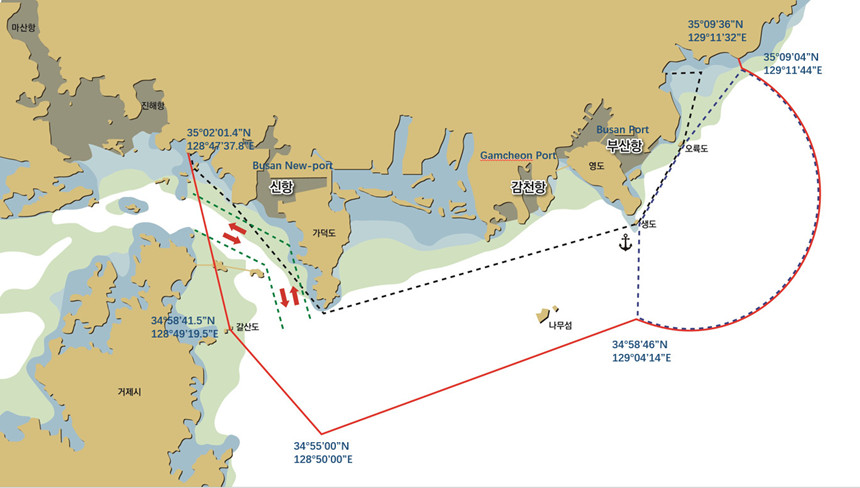
II. Voluntary Ship Speed Reduction Incentive
The incentive, implemented as early as December 2019, applies to 5 major Korean ports, namely the ports of Busan, Ulsan, Yeosu-Gwangyang and Incheon. Each sea area will span 20 nautical miles in radius, measured from a specific lighthouse in each port. Ocean-going ships that are no smaller than 3,000 tons will enjoy port entry/leave fee discounts when they sail at a speed below certain levels (12 knots for container ship and car carrier; 10 knots for other ship types). The discount ceiling differs by each port – container ships, which enters port fast and can have huge effect on reducing fine dust, will enjoy up to 30% discount, while other ships will enjoy up to 15% discount.
For more information on the vessel speed reduction incentive and eligible ships, please refer to the MOF announcement through the following link:
http://www.mof.go.kr/eng/article/view.do?articleKey=28138&boardKey=41&menuKey=485¤tPageNo=1
Eligible Ship-Types | Recommended Speed (Knot) | |||
Incheon Port | Yeosu, Gwangyang Port | Busan Port | Ulsan Port | |
Container Ship | 12 | 12 | 12 | 12 |
Bulk Cargo Ship | 12 | |||
General Cargo Ship | 10 | 10 | 10 | |
Crude Oil Carrier | 10 | |||
Chemical Carrier | 10 | |||
LNG Carrier | 10 | |||
Car Carrier | 10 | 10 | ||
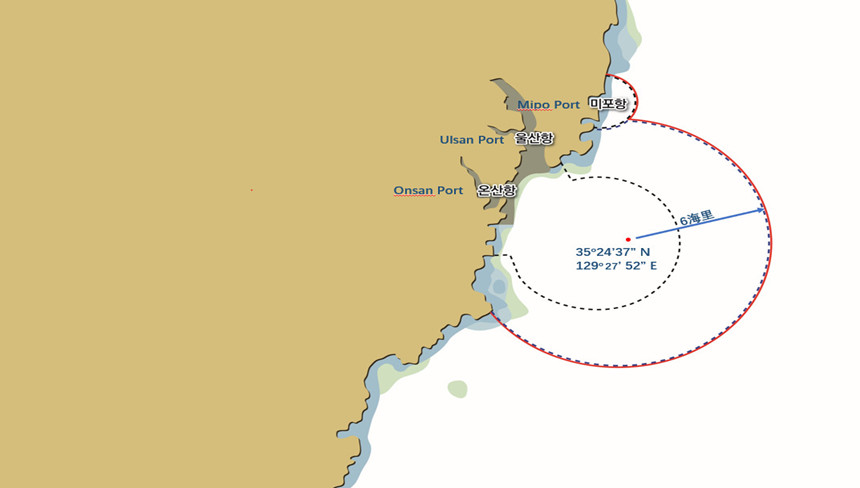
III.ECAs set by other countries and regions
A number of regions, states and ports around the world have implemented their own strict sulphur emission limits – and the list of such places is likely to grow in the future. Ship operators must therefore ensure crews are familiar with the sulphur emission limits in force in the jurisdiction to which they trade. Crews should also be provided with clear procedures and guidance to this effect. Here’s a summary of ECAs where maximum 0.1% sulphur fuel is required.
Country (Region) | ECA and Sulphur limits | Read More |
IMO | Ships entering the North America, US Caribbean, North Sea and Baltic ECAs shall use max 0.1% sulphur fuel or alternative measures. | http://www.imo.org/en/OurWork/Environment/PollutionPrevention/AirPollution/Pages/Sulphur-oxides-(SOx)-%E2%80%93-Regulation-14.aspx |
China | From 1 January 2020, 0.1% sulphur limit within the inland ECAs, the Yangtze River and Xi Jiang River. From 1 January 2022, the limit will also apply with-in the Hainan Coastal ECA. | http://xxgk.mot.gov.cn/jigou/haishi/201812/t20181220_3146515.html
|
EU | From 1 January 2010, ships at berth in EU ports for over 2hrs must use max 0.1% fuel from 1 hour after completion of berthing until 1 hour before de-berthing. | http://www.emsa.europa.eu/main/air-pollution/sulphur-directive.html
|
California, USA | From 1 January 2014, ships operating within 24 NM of California’s coastline are subject to a sulphur limit of 0.1%. The fuel shall also meet the specifications for MGO or MDO and compliance via scrubbers are not permitted. | https://ww3.arb.ca.gov/ports/marinevess/ogv.htm
|
Turkey | All ships are required to use marine fuels with a sulphur content not exceeding 0.10% while at berth in Turkish ports or operating on Turkish inland waterways. The requirement does not, however, apply to ships transiting the Turkish Straits. | |
Australia | From 1 October 2015, cruise vessels at berth in Sydney cruise terminal must use max 0.1% sulphur fuel from 1 hour after completion of berthing until 1 hour before de-berthing. | |
Iceland | From 1 January 2020, ships entering Iceland’s territorial sea (12nm from its coastline) and internal waters shall use max 0.1% sulphur fuel. | https://www.government.is/news/article/?newsid=05452daa-183d-11ea-944f-005056bc530c |
Norway | From 1 March 2019, the North Sea ECA 0.10% sulphur limit was extended to include the entire Norwegian world heritage fjord area, including the Nærøyfjord, Aurlandsfjord, Geirangerfjord, Sunnylvsfjord and Tafjord in Western Norway. |
For more information, please contact your manager at the Club.