October 9, 2026
Time charterers would sometimes require owners to suspend the services of the vessel temporarily to urge sub-charterers to pay hire before arrival at the port of destination or discharge of cargo. Owners are then in a difficult situation where there may be claims against them under both the charter and the bill of lading, irrespective of whether the charterers’ order was followed. It is therefore important for owners to protect themselves from such risks by obtaining a LOI beforehand.
I. Suspension of service at charterers’ order
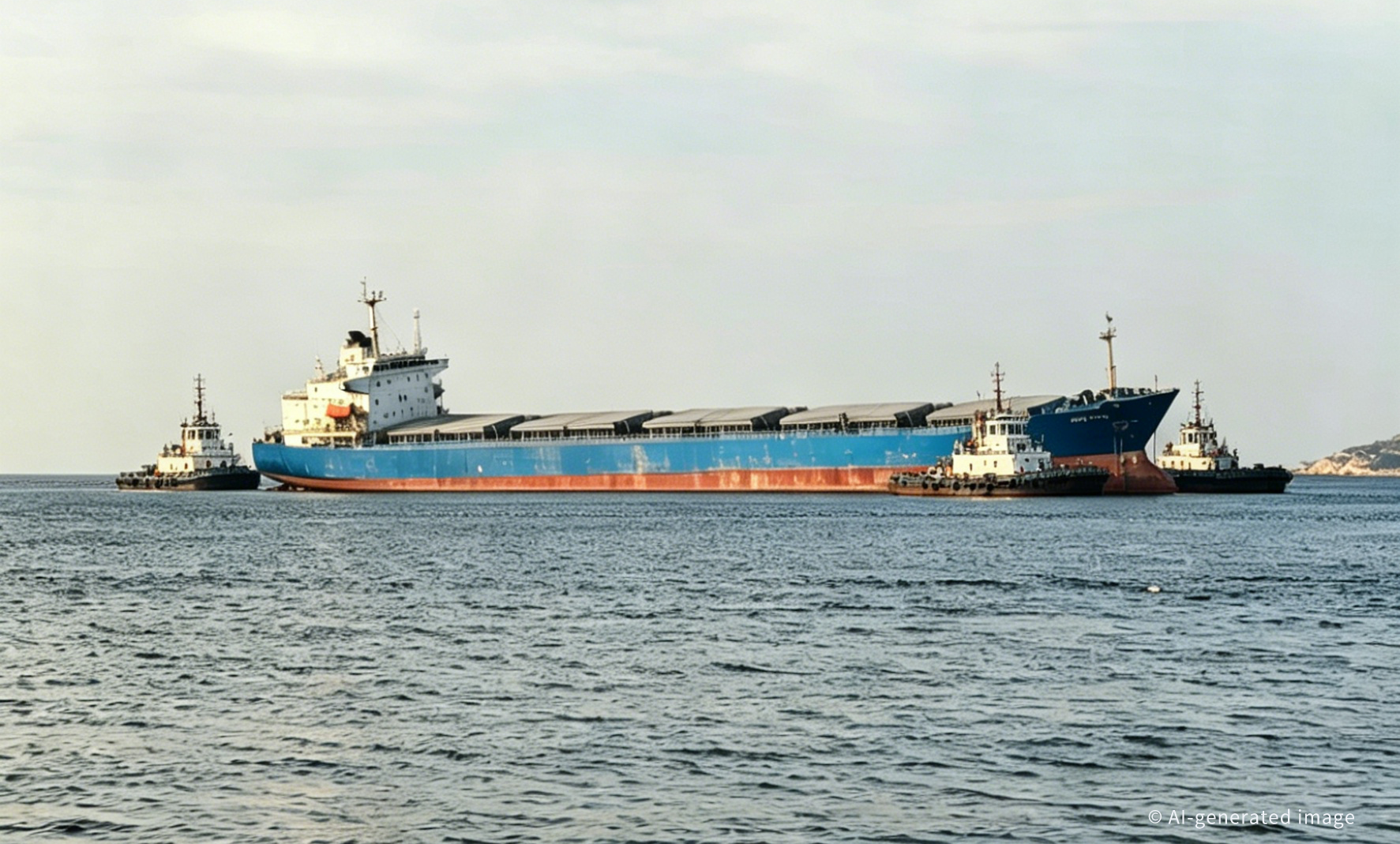
The Association has recently come across several cases where owners are required by charterers to put the vessel into temporary suspension of service while she is en route or approaching the port of destination. Such orders as anchoring, drifting, deliberately reducing speed, and deviating from intended voyage are given mostly when a certain party (sub-charterer) in the charter chain fails to pay hire or freight in full amount and in time. Charterers will then have to force the payment by preventing the full working of the vessel, giving rise to a legal dilemma for owners.
On one hand, owners need to follow charterers’ order under time charter parties and may be liable if they refuse to do so, and on the other, owners as carrier under the bills of lading are liable to cargo owners if the ship’s service is suspended. That is, owners may be held responsible for any potential consequences, regardless of whether the order is followed. Such problems for owners are frequently seen in practice, and this article aims to provide an analysis on owners’ responsibilities and some problem-solving ideas.
II. Owners’ obligation under time charters
As provided in clause 8 of NYPE 46 that “the Captain (although appointed by the Owners), shall be under the orders and directions of the Charterers as regards employment and agency”, it is normally agreed in time charters that owners shall obey the orders of charterers. Further, it is either implied or explicitly agreed, as in clause 9 of Beltime, that “the Charterers shall indemnify the Owners against all consequences or liabilities arising from the Master, officers or Agents signing Bills of Lading or other documents or otherwise complying with such orders”.
First thing to be noted here is that whether the charterers’ order is a legitimate order. If charterers give instructions for a voyage which threatens the safety of ship and cargo, or goes beyond the agreed area of navigation, or cannot be completed within the charter period, or involves cheating and fraud (like requesting the signing of an anti-dated B/L), such orders are not legitimate. In this respect, it is hard to argue that charterers’ order to suspend ship service simply for pressing payment of outstanding debt is illegitimate.
If the owners reject that order, charterers may claim against them for losses of hire/ freight that could have been payable, and the actual amount remains uncertain. If the order is accepted, owners may be subject to claims from the holder of B/L and are theoretically able to recover relevant losses from the charterers.
III. Owners’ obligation under bills of lading
Where owners temporarily suspend service of the vessel following charterers’ order, the cargo interests are entitled to claim for their losses under the bills of lading. Owners may be liable for financial losses due to late delivery of cargo, the consignee’s breach of sub-contract, and damage/shortage of cargo due to extension of voyage.
Owners are subject to risks of being responsible for breach of the charter party in situations such as:
1. Unlawful exercise of lien. It’s legally required in many countries that the cargo shipowners have a lien upon should be owned by the debtor, as provided in Article 87 of China’s Maritime Code that “if the freight, contribution in general average, demurrage to be paid to the carrier and other necessary charges paid by the carrier on behalf of the owner of the goods as well as other charges to be paid to the carrier have not been paid in full, nor has appropriate security been given, the carrier may have a lien, to a reasonable extent, on the goods.” In this case, cargo liens may be unlawful if the company liable for the unpaid hire/freight is not the receiver. Some countries have more detailed requirements on where and how the lien is exercised, like it should be exercised on shore and an official notice should be given in advance.
2. Unreasonable deviation and the obligation of reasonable dispatch unfulfilled. Owners may be held responsible for not performing with reasonable dispatch if the charterers’ order of suspension of service is obeyed.
3. In practice, some owners may assume that late delivery of cargo does not constitute a repudiatory delay with no written date agreed on the bill of lading, but it is noteworthy that the shipper may hold owners liable based on other causes.
IV. Advice to Members
In order to avoid disputes concerning such charterers’ orders as suspension of service, it is advisable for owners to first consider its obligations under the bills of lading and take into account the following.
1. Make clear who gave the order to suspend service. It’s sometimes a consensus in practice that the voyage instructions are given by sub-charterers directly to masters. Owners and masters, upon receiving such orders to suspend service, shall confirm with the immediate charterers to guarantee its right to seek recovery.
2. Investigate and try to find out who is responsible for the unpaid debt. Where the debtor is a relevant party under the B/L (the receiver), risks for owners will be reduced and owners might be entitled to exercise lien on cargo, depending on applicable laws.
3. Check with the local jurisdiction at discharge port if the exercise on lien is permitted, and if yes, urge the charterers to proceed with a lien on cargo accordingly.
4. Request a LOI issued by the charterers if owners decide to execute such orders. Generally, LOIs render a stronger protection to owners than charter parties where the right to recover against charterers is implied or specifically provided. Whoever issues a LOI promises indemnity against potential damage or loss beforehand, and the loss and liabilities arising from execution of charterers’ order are included. Also, it is normally stated in the LOI that charterers are to provide security as required should the ship or other property be arrested or detained, and by requesting signature of relevant parties, owners will be more financially secured.
5. If owners cannot obtain the LOI and decide to follow the charterers’ order out of commercial considerations, they may do so after signing and issuing a LOP.
The above content is only for Members’ reference and does not mean that the Association has expressed any view on any specific case, nor can it be used in any publication. For further information, please feel free to contact the FD&D department.