October 9, 2026
The Review of Shipping Safety Risks 2022 is currently available only in the language of Chinese.
I. Introduction
The past decade saw an overall positive safety trend in the shipping sector. Yet with the global merchant fleet continues to get older, fire/explosion has become a growing concern, especially onboard car carriers and container ships, representing the biggest cause of loss on top of foundered (sunk) during the past five years. In terms of cargo claims, it appears that smaller losses are increasing while larger losses are decreasing. With the impact of accelerating digitalization and decarbonization, the industry is faced with major challenges in containing these common risks through collaboration and operational improvement. As new technologies including big data and new fuels start to kick in, the focus now should be on identifying and mitigating risks related.
II. Industry Overview
According to the UNCTAD Review of Maritime Transport 2022, the global commercial fleet grew by less than 3% in the 12 months to January 2022, the second lowest growth rate since 2005. This mirrors an ageing fleet at the operational level. Since 2011, the total fleet has aged by 7%, from 20.4 to 21.9 years. As the global fleet continues to get older, it has become difficult for them to comply with the increasingly rigid environmental regulations.
The fifth annual Global Maritime Issues Monitor, jointly published by the Global Maritime Forum, Marsh and the IUMI in September 2022, reveals that the maritime industry is most impacted by the decarbonization of shipping and new environmental regulations in 2022. Geopolitical tension, workforce and skill shortages, fuel price increases placed third, fourth and fifth on the issues list. Pandemics dropped from the number four spot in impact in 2021 to the number 13 spot in 2022, suggesting that the industry is now better prepared to manage one.
The Allianz Global Corporate & Specialty’s (AGCS) Safety and Shipping Review 2022 analyzed ship losses and casualties in the 100GT+ fleet. 54 total losses were reported in 2021, 17% down compared with 65 a year earlier. Annual shipping losses have declined by 57% over the past decade since 2012 (127), representing a significant improvement on shipping safety, considering the fact that there were over 200 vessels lost during the early 1990s.
III. Statistics 2012-2022 (Vessels over 3,000GT)
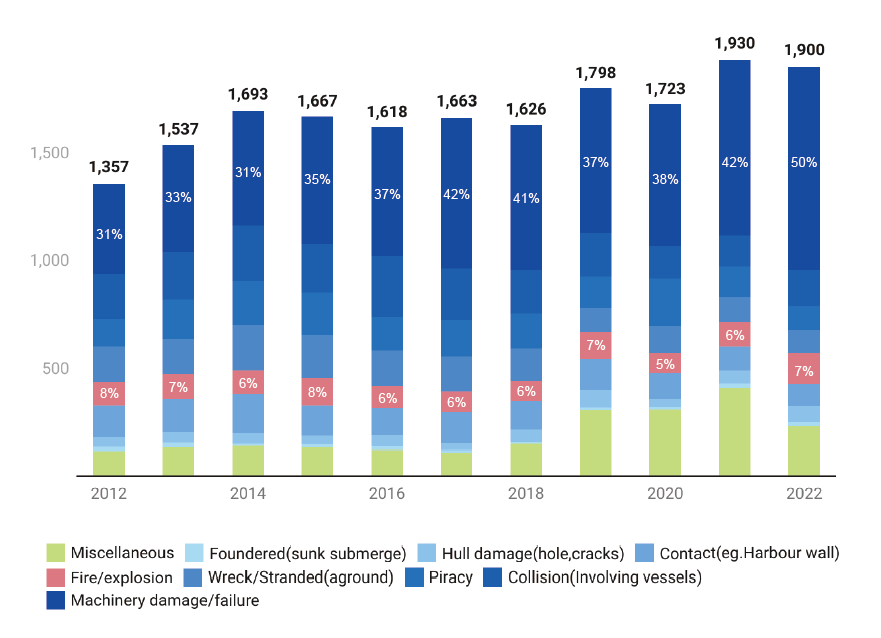
Statistics show that incidents caused by machinery damage have been on the rise, especially with the number and proportion of all incidents both climbing in the last two years. The CII regime coming into force on 1 January 2023 will likely bring heightened risk of machinery breakdown claims and further add to the uncertainty. In the meantime, fire hazards involving larger vessels, cargo mis-declaration and carriage of EVs have been a top concern, since total loss of three vessels over 3,000GT, a ro-ro passenger ship, a car carrier and an oil tanker took place in just the first three months of 2022 due to ship fires.
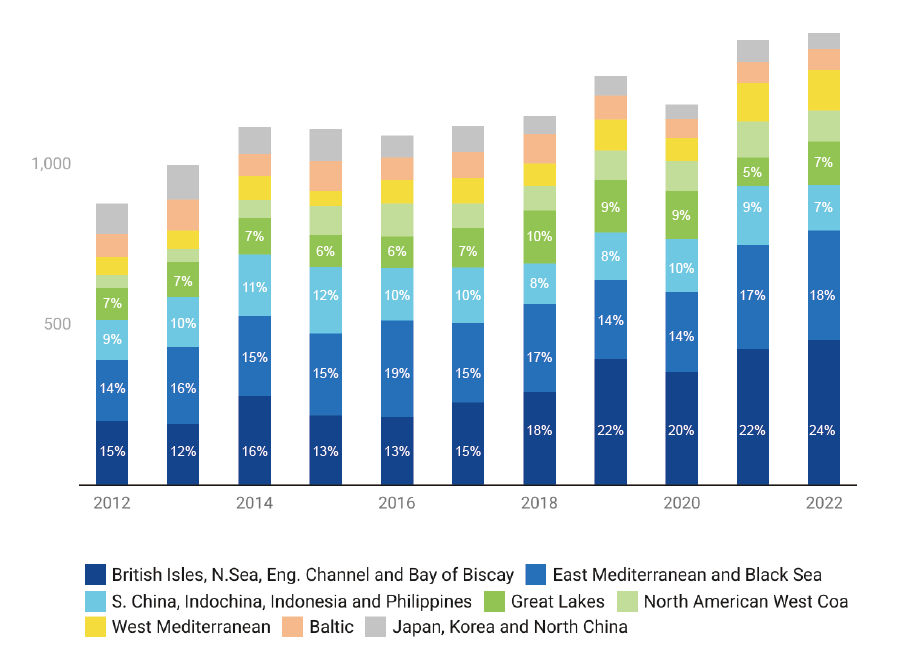
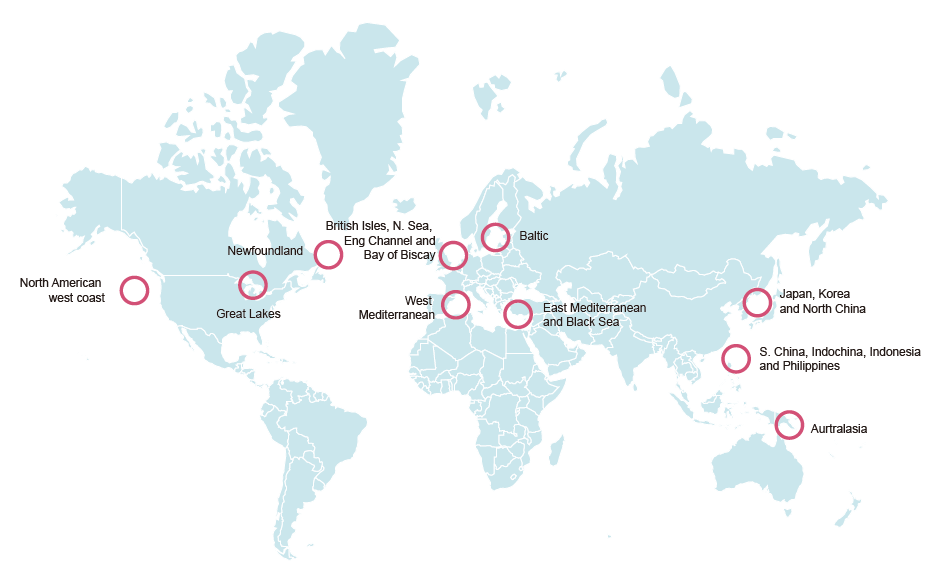
IV. Focus on Safety Risks
With the rapid development of major ports and ships becoming larger, smarter, more environmentally friendly and more specialised, ship safety is generally improved, but fires on board vessels remain a key cause of major losses and a growing concern considering risks associated with cargo declarations and EV transportation.
According to Clarksons Research’s data, the global fleet has continued to grow at a low rate in recent years, which leads to the ageing of the global fleet. Statistical analysis show that the age of a ship is directly proportional to the incidence of system and machinery failures, placing higher demands on ship management and ship maintenance.
According to the IUMI 2022 Stats Report, it appears that smaller losses are increasing whereas larger losses are decreasing in number. 32% of claims were below USD 500,000 and this accounted for 6% of the incurred loss total.
With maritime transport embracing decarbonization in the last two years, the application of digital technologies has inevitably become an important part of the transition. As ICT systems begin to take on an infrastructure-like status in the shipping sector, the surge of cyber risks becomes a natural consequence of the global fleet’s increased reliance on information interconnection.
V. Uncertainty under New Challenges
Considering the drastically changing global situation post Covid and the war in Ukraine and the rapid development of technology in shipping, the industry is faced with increased risks arising from the use of energy-efficient technology, vessels getting larger, innovative way of transportation, and carriage of new types of cargo like lithium-ion batteries, as well as the introduction of ship automation and cyberattacks due to improved ship-shore interconnectivity. Many of these risks interact in complex ways and will undoubtedly add to the uncertainty across the industry.
VI. Closure
With the whole community pushing the transition to green shipping in recent years, new technologies are introduced and integrated with the original technology, leaving great impact on the safety, compatibility and stability of the old system. The industry needs to be aware of this to ensure a smooth transition. At the same time, the outlook of the industry remains uncertain with the increase in ship sizes and the application of new fuels. Going forward, there are both opportunities and challenges, and on the road to a safer and cleaner future, the shipping industry needs to have an overall view of safety risks and collaborate in identifying and implementing control measures to ensure robustness, resilience and continuous development of the maritime safety system.
The Review of Shipping Safety Risks 2022 is currently available only in the language of Chinese. It has referred to data and information disclosed by Lloyd’s List Intelligence Casualty Statistics, Clarksons Research, Allianz Safety and Shipping Review 2022, UNCTAD Review of Maritime Transport, IUMI Stats 2022 and related news. To get a full edition of the report, please contact the loss prevention department.