October 9, 2026
The Club’s correspondent Rabb Carvalho Advocacia has recently reported a noticeable surge in claims and allegations at Vila do Conde Terminal, Barcarena involving ship’s cranes.
The Club’s correspondent Rabb Carvalho Advocacia has recently reported a noticeable surge in claims and allegations at Vila do Conde Terminal, Barcarena involving ship’s cranes—most commonly stemming from mishandling by stevedores and subsequent assertions of equipment damage and operational misconduct. The Club would therefore advise on the importance of strict operational controls, close supervision during cargo work, and immediate documentation whenever any concerns arise.
I. Typical Mishandling Scenario
Technical findings describe a recurring mechanism of failure not driven by maintenance, but by operational practice. Initial allegations often blame ship’s equipment, but subsequent inspections have repeatedly disproved such claims.
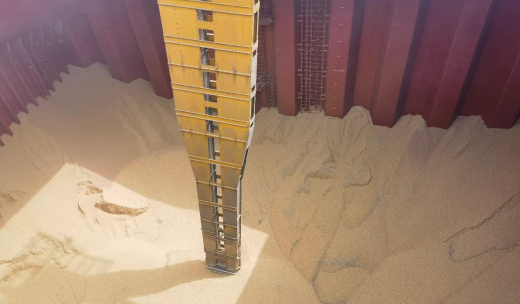
Grab movements become misaligned (e.g., slewing with the grab deep in the hold, poor lead management, or uncoordinated hoisting while the grab is not centered).
The hoisting wire makes repeated lateral contact with the hatch coaming or hold structure, subjecting it to abnormal side-bending and torsional stress.
This stress drives progressive strand damage, leading to a final tensile rupture, often under a light or moderate load due to the stress concentration.
II. Legal and Commercial Pressure on Ships
A fatal accident occurred in early December at Porto de Vila do Condo when a loaded bucket detached, killing a port worker. While the circumstances are still being clarified, initial allegations by terminal/stevedores usually seek to blame ship’s equipment, demanding immediate security and pursuing ship arrest measures for alleged equipment damage.
It is thus evident that such accidents can not only damage critical ship equipment and cause property loss, but may also lead to serious casualties, or even trigger port security inspections and ship detention, further disrupting the schedule.
III. Evidence Preservation
Crane disputes typically become a three-way argument between Owners, Charterers, and Terminal/Stevedores. The outcome turns on the quality of evidence, not rhetoric.
It’s important for Owners to capture below evidence immediately, preferably the first 60-120 minutes upon occurrence of the incident:
As poor maintenance is a common first allegation, ships are advised to be prepared to produce these documents immediately: wire certificates and traceability, installation records, planned maintenance history, prior inspection reports, and applicable discard/inspection criteria (e.g., classification society reports).
IV. Advice to Members
To effectively prevent crane wire failures, it is recommended to implement pre-operation prevention, real-time monitoring, early intervention, and emergency response.
Before cargo starts:
The Chief Officer should meet with stevedores to confirm the discharge plan. Verify the grab’s working condition, check for any fault indicators, establish the communication method and confirm the presence of a signaller/banksman. Ask them to sign Checklist of Crane/wiring conditions.
The duty officer and watchkeepers must monitor all crane handling and document any concerns immediately. Maintain a photographic record where helpful.
Ensure all limit switches remain functional. Do not permit routine overriding. Any bypass must be exceptional, under direct senior supervision, and avoided during normal operations.
Maintain a properly completed Register of Lifting Appliances/ Cargo Gear. Keep certificates and maintenance history ready for immediate production.
During cargo operations:
Treat crane operations as a controlled shipboard activity. The ship retains a core safety duty, and the watch must actively challenge poor practice. Intervene early and decisively if mishandling is observed. Typical “red flags” requiring intervention include slewing with grab in hold, hoisting off-center, snagging or “kissing” coaming, and overriding limit switches.
If mishandling is observed:
Immediately halt operations if unsafe handling is observed or if the wire/ grab contacts the ship’s structure.
Use time-stamped video and still photos to document the grab’s trajectory, contact points on the coaming, and any communication failures or absence of a signaller.
Issue an LOP at the time of the event, not after. Describe the unsafe acts, reserve all rights, and demand rectification. This is critical evidence.
If unsafe practices persist, refuse to continue operations until the stevedore gang or operator is changed and a safe method of work is agreed upon and implemented.
V. What Not to Do
In the event of such ship crane wire/ grab incidents and with pressure from the terminal and stevedoring company, ship’s crew may act hastily and to protect their position in the heat of the moment, it’s recommended to avoid these common pitfalls:
For more information, please contact Managers of the Association.