October 9, 2026
A decade of digital transformation has networked the modern ship — ECDIS, integrated bridge systems, main engine remote controls and cargo management systems all ride the same data highways, linked to shore offices and the wider internet via satellite. Efficiency has soared but so has exposure: ships are now permanently online, remotely accessible nodes. Geopolitical spill-over has raised the stakes further, with state-sponsored APTs, GPS jamming and spoofing, and malware implants joining the threat landscape. Attackers are no longer just after money — they seek strategic leverage, infrastructure disruption and geopolitical advantage. Cyber risk has moved ashore to on board, and maritime cyber defence is now a strategic priority.
Shore-based cyber attacks typically stop at data encryption and business interruption. The real gamechanger is that attackers are now targeting the ship itself. A string of incidents — from authorised penetration tests to real intrusions — shows that OT-level breaches are no longer theoretical. Keyincidentsin recent years:
A cyber-attack on a ship is not just an IT problem. The risks and consequences now unfolding map directly onto traditional maritime risks.
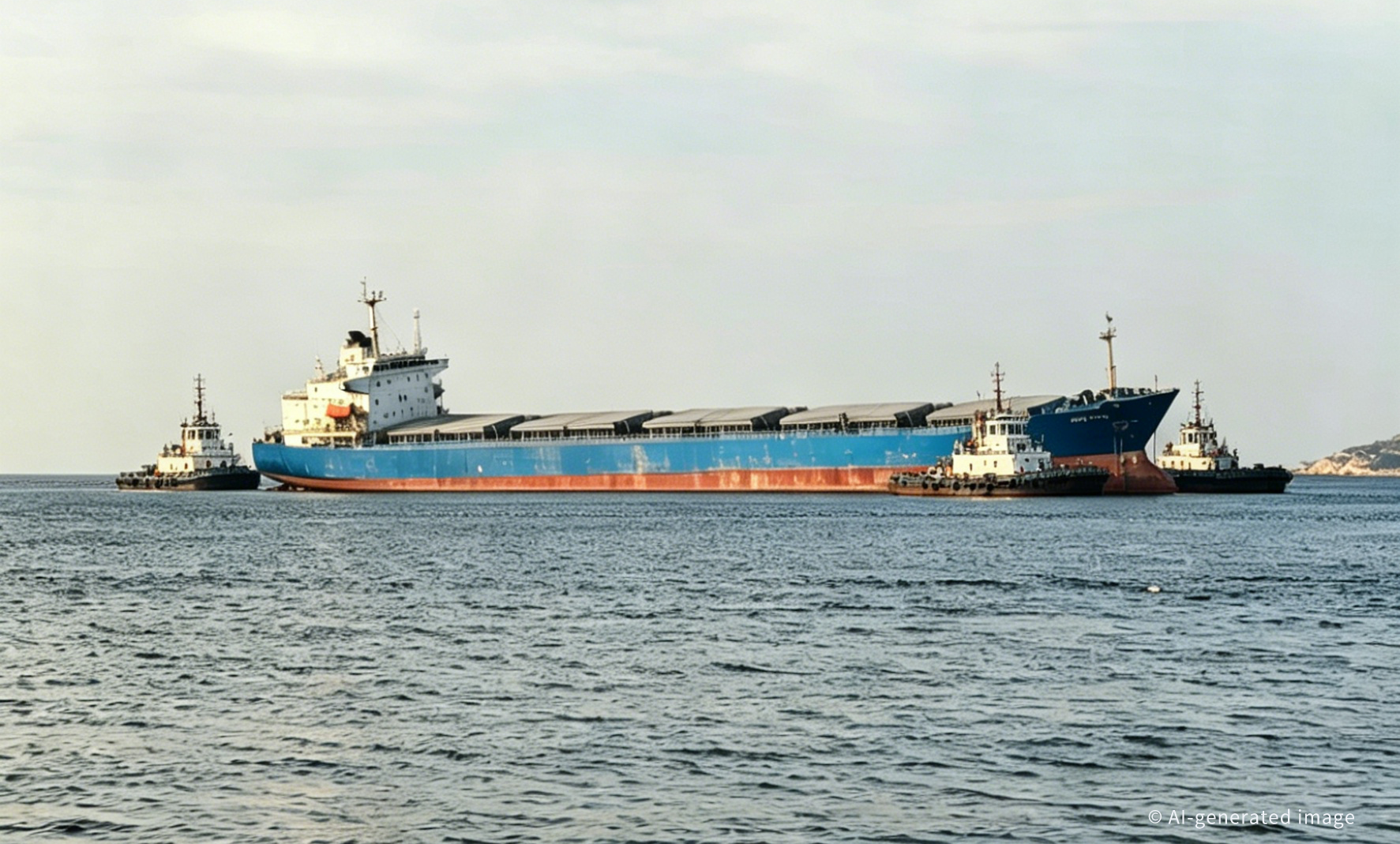
If an LNG carrier’s tank pressure controls, BOG management system or safety valves are compromised, the consequences escalate quickly — from overpressure to rupture, explosion and fire. If main engine, steering gear or bow thruster controls are hijacked, collisions or groundings can follow in confined waters or ports. Whatever the final investigation finds, the Vivit Africa incident shows that attackers can already reach a ship’s safety-critical systems.
Deviations, diversions and inspection stoppages generate extra fuel costs, port charges and schedule losses. Shore-side system paralysis can close terminals and back up cargo. The DNV incident — a full server rebuild, fleet management interrupted for nearly 1,000 vessels — and Maersk’s estimated USD 300 million loss are both case in point.
Collisions, oil pollution, cargo loss and damage, personal injury, and damage to port facilities — all triggered by a cyber-attack — still fall within traditional P&I liability categories. The cyber cause does not, in itself, change the nature of the liability. It does, however, complicate how incidents occur, are handled and are claimed.
As threats escalate, regulations shift from guidance to mandate. IMO Resolution MSC.428(98) has long required cyber-risk management in SMS, with compliance due from the first annual DOC audit on or after 2021. The IMO issued updated maritime cyber risk management guidelines in 2025. On the newbuilding side, IACS Unified Requirements UR E26 (Cyber Resilience of Ships) and UR E27 (Cyber Resilience of On-board Systems and Equipment) are mandatory for ships contracted on or after 1 July 2024.
For shipping companies, practical measures fall into five areas:
Cyber risk is not just the IT department’s problem — itis a part oftheSMS. A designated person should lead, supported by shore-based IT and cyber teams, with the master’s reporting lines clearly defined. Start with an onboard IT/OT asset inventory and risk register, classifying each system — bridge navigation, dynamic positioning, safety systems, propulsion and power generation, communications, cargo control, alarms and monitoring.
Industry practice groups systems into three categories by failure consequence: Category III (highest — navigation, DP, safety, propulsion); Category II (communications, cargo control, alarms, monitoring); Category I (administrative and office systems). Allocate protection resources accordingly. Newbuilds should also verify compliance with IACS UR E26/E27.
Network segmentation comes first. OT networks on the bridge and in the engine control room must be physically or logically isolated from crew Wi-Fi and office networks, with firewalls and intrusion detection between critical systems. On some larger vessels, navigation, propulsion and steering share one network behind a single firewall — breach that boundary and everything is exposed.
Other essentials: individually assigned system accounts with regular password rotation; remote maintenance connections using multi-factor authentication, enabled only for limited windows and closed immediately after use; special attention to satcom terminals and VSAT management ports — well-known weak points; a patch-management plan aligned with vessel operating schedules; up-to-date antivirus; and offline backups of ECDIS routes and configurations, control-system software and critical files, with recoverability tested regularly.
Many intrusions enter through legitimate routes — a vendor’s maintenance laptop, a casually inserted USB drive, a remote-access account left permanently open. Follow a formal change-management process: every software installation, configuration change and hardware replacement needs a request, assessment, approval and record. External USB drives and laptops must be scanned before boarding; connection to critical networks requires specific authorisation; and each remote-access session by a service provider should be individually approved and fully logged.
Phishing remains one of the most common intrusion vectors. Train by role and keep attendance records. General crew: spot phishing emails, manage passwords,andhandle removable media correctly. Deck officers and engineers: recognise OT system anomalies and execute manual backup procedures. Shore staff: prevent business email compromise and other email fraud.
Beyond training, run regular practical exercises,activating alternative communication channels if ECDIS fails or ship-shore links go down, and taking manual control when engine or steering controls behave abnormally. Include these in the annual drill programme alongside fire and abandon-ship exercises.
Every ship needs a concise, workable cyber-incident response plan built around six steps: identify, isolate, report, respond, recover and review.
If crew spot abnormal pop-ups, encrypted files or lost system control, they should immediately disconnect and isolate the affected device and stop using removable media. The master must promptly report the incident to the designated shore-based cyber contact, with evidence such as photographs. The shore team responds based on incident type and severity,covering sensitive data, computer systems, ship communications and third-party OT applications like ECDIS. Logs, emails and other evidence must be preserved for forensics.
During recovery: collect evidence before reinstalling systems; change all passwords after reinstallation; apply patches before bringing systems back online. Then conduct a post-incident review and update the plan. A standard cyber-incident reporting form should record time, vessel position, affected systems, severity and measures taken,ensuring consistent, well-documented reports to the company, flag State, port State and insurer.
From Maersk’s USD 300 million loss in 2017 to an LNG carrier forced off course by suspected cyber interference in 2026, the threat has escalated dramatically in under a decade — from low-level data theft to sophisticated, targeted attacks that manipulate critical navigation and propulsion equipment.
Ships at sea are not immune. Long communication links, ageing industrial control systems, and varying — and frequently rotating — cyber awareness among crews make shipboard cyberspace vulnerable, and increasingly attractive to APT groups and professional hacking gangs.
For any integrated ship-shore management system, embedding cyber security fully into corporate safety governance — with responsibilities assigned to positions, rules applied to individuals, and drills run as routine — is no longer optional. It is a baseline requirement that bears on operational continuity, asset security and compliance.
For more information, please contact Managers of the Association.